
Digital Assets’ Tax Classification and Reporting Requirements

Digital Assets and their variations have been proliferating; so much, over the last couple of years that it’s difficult for the law to keep up; but that does not mean that the law cannot catch up. Globally, regulators have digital asset regulation on their mind and within their eye slight. In the United States where Coleman Jackson, P.C. practices law, the United States Treasury has a lot to say about how digital assets are classified for federal tax purposes and reported to the Internal Revenue Service and to the Financial Crimes Enforcement Network. These are two agencies of the United States Department of the Treasury headquartered in Washington, D.C. Tax Reform Hearings of the 119 Congress has been held and continues with respect to the proper general tax principles, ideas, and economic realities that should apply to digital assets such as Bitcoin, Ripple, XRP, and similar emerging cryptocurrencies.
The potential impacts of artificial intelligence into this discussion have barely touched the surface. A series of hearings were held by Congress in 2025. On October 1, 2025, the Senate Finance Committee held the Examining the Taxation of Digital Asset hearing where the joint report of September 29, 2025 called, the JCX-44-25 was presented and discussed. Also, Professor Annette Nellen, a lawyer, CPA, academic, author, and professor-director of the graduate tax program at the San José State University testifying on the part of the American Institute of Certified Public Accountants.

The House Ways and Means Committee has also held numerous hearings involving digital assets involving their tax classification and its regulatory framework. Last July two noticeable hearings were held: July 26, 205, Making America the Crypto Capital of the World: Ensuring Digital Asset Policy Built for the 21st Century and in July 26, 2025 the House Ways and Means Committee were looking at digital asset tax policies as well other provisions of the U.S. Internal Revenue Code when passing the One Big Beautiful Bill Act of 2025. We list this ferry of activity just to say, digital assets are being regulated and more regulation is likely to come soon from the U.S. Congress and from regulators from around the globe. But for now, let’s look at the regulations that applies to buying, selling and holding digital assets by U.S. Citizens, Green Card Holders and Others with Substantial Presence in the United Sates.
FBAR AND FATCA REPORTING OBLIGATIONS FOR FOREIGN DIGITAL ASSETS
United States Department of Treasury
The application of Foreign Bank Account Report (FBAR) and Foreign Account Tax Compliance Act (FATCA) requirements to foreign digital asset accounts remains an area of regulatory uncertainty. US persons are subject to reporting obligations for foreign financial accounts and assets under implementing regulations, though specific thresholds and requirements vary between FBAR and FATCA frameworks, 31 USCA § 5314. However, existing FBAR and FATCA regulations and guidance focus on traditional financial accounts maintained by financial institutions. The Joint Committee on Taxation has noted that “FATCA does not directly address digital assets, and to date, no guidance under FATCA or the section 6038D reporting rules has addressed the issue” I.R.S. JCX- 44-25.
The location of digital asset providers significantly impacts potential reporting obligations. Accounts with domestic exchanges like Coinbase would not trigger FBAR or FATCA reporting, while accounts with foreign exchanges may require reporting depending on forthcoming regulatory guidance. US persons holding digital assets in self-custody wallets generally would not have FBAR or FATCA obligations since no foreign financial institutions are involved.
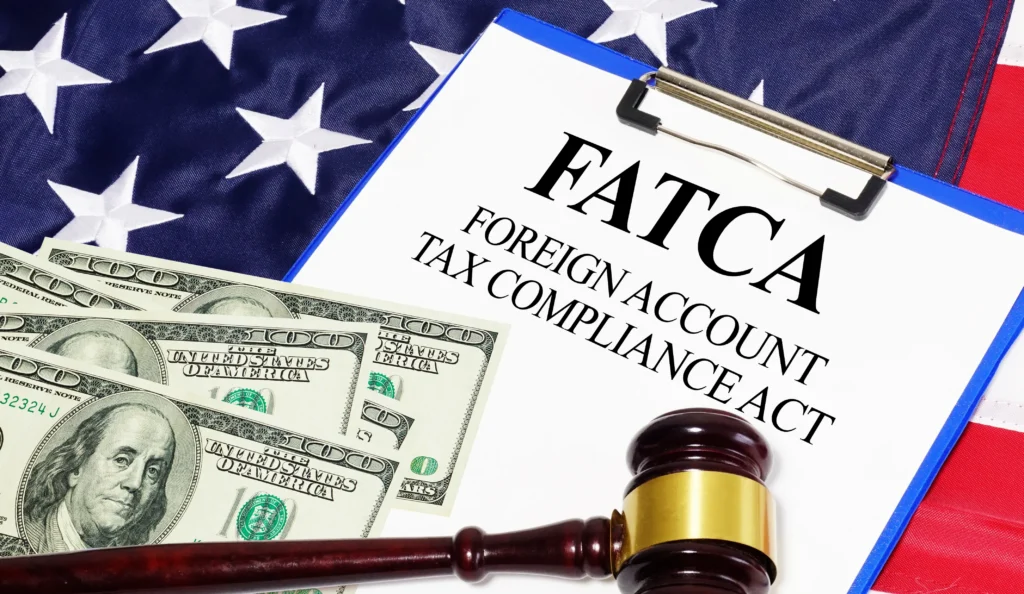
Treasury regulations effective July 11, 2025, require brokers to report sales and exchanges of digital assets on Form 1099-DA, Digital Asset Proceeds From Broker Transactions, for sales occurring on or after January 1, 2025 26 CFR § 1.6045-1. These regulations define digital assets as “any digital representation of value that is recorded on a cryptographically secured distributed ledger (or any similar technology)” excluding government-issued currency, 26 CFR § 1.6045-1. The United States ruled as early as 2012 that digital assets are property not currency for federal tax purposes. This has been the foundational federal tax approach to virtual assets from the beginning and there are no signs of this changing.
The SEC and CFEC and Other Federal Agencies

These federal tax regulations are not the only federal laws regulating digital assets. The anti-money laundering statutes play a significant role in regulating virtual assets due to the propensity of digital assets lack of transparency, traceability and use in criminal transactions. The Security Exchange Commission regulates digital assets as well and several Courts have said that the rules enforced by the SEC applies to certain digital assets under the investment contract analysis focusing on the SEC for legal and factual elements, namely, (1) investment of money, (2) common enterprise, (3) expectation of profits, and (4) profits derived from efforts of others. The Commodity Futures Exchange Commission also regulates digital assets. According to CFEC, digital assets are considered “goods” exchanged in a market for a uniform quality and value. Backed up by numerous federal courts, the CFEC rules view digital assets as a commodity.
State and Local Agencies
Texas State Law and Local Laws’ Treatment of Digital Assets

Texas and local governments of Texas have scant regulations concerning digital assets specifically. For now, traditional Tax Code definitions are likely to apply. For example, Texas appears to follow federal treatment of digital assets as property, though specific guidance on sales and franchise tax implications remains limited. Individuals and businesses transacting purchases and/or sales using digital assets should expect that Texas would likely treat those transactions under the Texas Tax Code as sales and purchases of tangible personal property, which is, subject to the Texas Sales and Use Tax. Moreover, Texas currently has a codified list of taxable services. The one those selling digital assets on a platform should be aware of is the Taxable Data Processing Service and the Software as a Service Tax. For now, traditional State and Local Sales Tax Rules as interpreted and enforced by the Texas Comptroller of Public Accounts are likely to apply to digital asset purchases and sales. Again, Texas currently seems to view digital assets the exact same way as the federal government; that it, as commodities and property. Texas has; however, enacted additional legislation addressing digital asset service providers and establishing regulatory frameworks for businesses operating in the digital asset space. Just like in international and federal regulatory space, those buying and selling digital assets much stay tune to the emerging regulatory environment of further developments in regulation of digital assets and artificial intelligence at the state and local level.
Key Take Aways
In this article, I have not touched on other regulators, such as the Security and Exchange Commission and State Regulators, such as the Texas Comptroller of Public Accounts in Texas. Digital asset holders can expect to face increasing scrutiny and regulations from international, federal, state and local authorities. The complex and evolving regulatory landscape for digital assets creates significant compliance challenges for US persons holding cryptocurrency. Key practical implications include comprehensive record-keeping requirements for all transactions to calculate tax liability, potential double taxation and reporting obligations for international digital asset activities, and significant penalties for non-compliance with reporting requirements. The need for specialized legal and tax counsel has become essential given regulatory uncertainty, while business licensing requirements create barriers for digital asset service providers in Texas and at the federal level. Ongoing monitoring of rapidly changing regulatory guidance is crucial, as is implementation of robust AML and CFT programs for digital asset businesses. The attorneys at Coleman Jackson, P.C. should be your go to source for tax law updates, business law update and immigration law updates. Some of the other practice areas mentioned briefly in this article, such as, securities and exchange commission, commodity exchange commission are areas of law that our firm does not practice. We have our hands full with tax law, estate and asset protection, business law and business immigration matters.
This law blog is written by attorneys at Coleman Jackson, P.C., which is located at 6060 North Central Expressway, Suite 620, Dallas, Texas 75206 for educational purposes; it does not create an attorney-client relationship between this law firm and its reader. You should consult with legal counsel in your geographical area with respect to any legal issues impacting you, your family or business.
Coleman Jackson, P.C. | Tax Law, Business Law, Immigration Law | English (214) 599-0431 | Spanish (214) 599-0432 |
